

%20(1).jpg)
AT THE TABLE
Bryan Finch, Marketing Manager, Cap America
Alex Pille, Director of Product Management–Hard Goods, Champro
Lauren Cook, Product Line Manager, Momentec Brands
Erika Kelly VP, Nike Team Headwear, Paramount Brands
Nate Currier, Head of Sales, Sports, Outdoor Cap & Legendary Headwear
Mike Hiskey, Creative Director, Pukka
Todd Bradney, Director of Team Sales, Richardson
Rachelle Manning, Senior Manager, SanMar Sports
Chad Kennedy, National Sales Manager, The Game
Let’s start with the basics: What styles are most in demand?
Chad Kennedy: We’re seeing continued strength in traditional fitted and adjustable performance baseball caps, but the biggest growth is in crossover styles that athletes can wear both on and off the field. Trucker styles remain extremely popular with five-panel and rope hats.
Bryan Finch: Performance caps continue to lead the market, but we’re seeing strong growth in truckers, rope caps and five-panel A-frame styles that bring a more retail inspired look to team programs.
Lauren Cook: It really depends on the dealer’s customer base, but we’re seeing several clear trends emerge. Five-panel performance caps continue to gain momentum, along with five-panel unstructured silhouettes that blend athletic and lifestyle aesthetics. On the team side, perforated performance caps have seen significant growth as athletes and coaches look for lightweight, breathable options. We’re also seeing a strong resurgence of snapbacks, particularly performance snapbacks, as teams embrace a more modern retail-inspired look
Mike Hiskey: The biggest shift we’re seeing is that team buyers want headwear that looks more like premium lifestyle and golf product rather than traditional team issue product. Rope hats continue to be one of the strongest growth categories across team sports, golf and fanwear. The style has crossed over from golf into mainstream sports and we’re seeing strong adoption from schools, clubs and organizations looking for a more current look. Trucker styles remain extremely popular, especially premium truckers featuring elevated materials, better construction and higher-end decoration. Traditional structured six-panel Stretch-Fit hats still account for a large percentage of team volume, but dealers who are showing truckers, rope caps and modern five-panel silhouettes are winning more business.
Todd Bradney: Our 112 Trucker continues to lead the way in off-field headwear, while our 258 and 355 rope caps and our new 226 and 228 performance models continue to resonate.
Nate Currier: Depending on the age and overall use, we do see a variety of demands. However, we continue to see most custom team requests lean towards the flexible fitted style caps that echo more of the traditional on-field shape. Rachelle Manning: For actual team headwear the style depends on the sport. For on-field it is Flex fit trend instead sized fitted. For coaches, bucket hats. Truckers are going strong and rope hats are a huge trend right now.
Erica Kelly: Authentic on-field baseball styles continue to be in demand. We are also seeing an uptick in Buckets and our Rise Rope cap.
.jpg)
And what about color trends?
Kennedy: From a color standpoint, core will always lead the way but we are seeing teams become more willing to incorporate alternate colorways for fanwear and coaching staff.
Finch: Color is still very important, especially in the team market, but customers are also paying closer attention to silhouette, fabric, fit and decoration. That trend is influencing everything from performance caps to lifestyle-driven fanwear.
Alex Pille: Black has consistently been a bestseller, no matter the style. It’s a perfect neutral that goes with pretty much any team colorway. Outside of that, we’ve been getting a lot of requests for light blues and specialty colors.
Lauren Cook: Classic team colors remain strong, but we’re also seeing increased demand for neutrals such as stone, charcoal and cream, along with tonal decoration and lifestyle-inspired color combinations.
Mike Hiskey: We’re seeing two simultaneous color trends. Team color programs remain important, but there is growing demand for lifestyle color palettes including cream, sand, stone, charcoal, olive and tonal monochromatic looks. Teams want merchandise that players, parents and fans will wear every day, not just on game day.
Todd Bradney: Traditional team colors prove to be timeless, while our expansion into pop colors like Cream, Summer Pink, Light Mint, Rifle Green and Lime are matching the trends we’re seeing across baseball and softball.
Currier: We tend to see more of the “pop” colors used as accents, such as a light or powder blue and even some pinks. When thinking of sideline gear for parents and fans, the trucker is still popular but also seeing trends move in the direction of a higher profile 5-panel twill cap that has matching pops of color.
Manning: Pastels and tonal looks are in, as are multi-color hats with contrasting eye lids, buttons, bills and crown.
Kelly: Black, navy, red, and royal continue to be the majority of the business.
Are there any technical advances in terms of fabrics or production that dealers should know about?
Finch: We’re seeing continued innovation in lightweight performance fabrics, stretch materials, laser perforated ventilation and moisture management sweatbands. Dealers are also looking for products that blend performance with retail styling, in addition to traditional team looks.
Hiskey: Absolutely. Performance is no longer a niche feature. Today’s buyers expect lightweight construction, moisture management, stretch comfort, breathability and UV protection. The biggest trend isn’t just technical fabric. It’s combining performance with retail-level styling. End users no longer want to choose between function and appearance. We’re also seeing increased interest in lightweight performance woven fabrics, laser perforation for ventilation, stretch fit technologies, moisture-wicking sweatbands, recycled and sustainable materials, water-resistant and weather-ready fabrics and advanced decoration methods including dimensional embroidery, premium patches, woven labels, and mixed-media applications.
Kelly: We are leaning in to upgrading the tech on our builder. We are creating a better UX that enables our customer to follow their order from submission through shipment, an enhanced design builder with more features and improved design interface for smoother workflow.
Manning: Perforated backs help with ventilation and sleek look and more high school level baseball coaches are selecting style like this.
Cook: Perforated fabrics paired with lightweight performance materials have become increasingly popular because they improve breathability without sacrificing structure or durability. We’re also seeing advancements in sweatband technology, including moisture-wicking and cooling properties. Dealers should pay close attention to these technical features because consumers are becoming more educated and are looking for products that deliver both performance and style.
Pille: When we look back at the history of traditional baseball caps, they were made of wool for its natural ability to regulate temperature. In this modern era of man-made materials, polyester has become the dominant player because it offers the perfect ratio of performance and cost. Polyester has improved moisture management properties over traditional materials while also being readily available at a very affordable price. Other new advancements we see are in ventilation, either with improved fabrics or laser-perforated panels.
Kennedy: Performance fabrics continue to evolve. Moisture-wicking materials, laser-perforated ventilation panels, lightweight stretch fabrics and antimicrobial treatments are becoming more common even at the youth and high school levels. On the production side, improvements in technology allow for more detailed logos and mixed-decoration applications. Dealers should also pay attention to advancements in patch applications and heat-applied embellishments that can provide a premium look while maintaining fast production times.
Currier: Cooling and moisture wicking fabrics, fabric that stretches with the contour of the head and breathability are all things that we intentionally add as features of our headwear that gives the person wearing it a comfortable fit.
.jpg)
Where are there other headwear opportunities for team dealers beyond the traditional sports teams?
Kelly: We focus on serving the athlete. And we believe that if you have a body you are an athlete. This helps us think beyond the field of play to include other groups on campus, people in the stands and fans of sport. The opportunities are limitless when you use that filter.
Kennedy: Many dealers still focus primarily on player-issued caps, but some of the strongest growth is occurring around fan and community engagement. In addition to the team order, we continue to see significant opportunities in booster clubs, school spirit programs, youth recreation departments, corporate events and in general fundraising.
Finch: The opportunity extends well beyond the roster. Booster clubs, school stores, fan shops, tournaments, camps and community events all create demand for headwear. A great cap can appeal to players, coaches, parents and fans alike, making it one of the most versatile products a dealer can offer.
Bradney: There are tremendous opportunities for headwear growth with fanwear and booster clubs driven by online stores. In addition, team dealers are finding great success leveraging their network and relationships to drive headwear sales in non-team categories like construction/trades, agriculture, food and beverage and any other industry that looks to headwear as a key promotional product.
Pille: We are always going to be a team-first brand, but it is important to acknowledge that a team is not just the players and coaches — it also includes the school staff, the players’ families and the fans. Each of those groups may want a different cap style that better matches their taste. So, as dealers, it is important to offer a broad assortment of cap styles that may cater to these different customers. Just to give an example, the baseball team may want a fitted six-panel cap, but the parents and fans may want an unstructured dad cap or a trucker cap. Having all three styles in your assortment could be a big benefit.
Currier: Sideline wear and booster club opportunities are often times overlooked. As a parent of an athlete, a cap is a great way to show support while watching the game or out in the community while also helping whatever school, club, or organization raise money and awareness.
Cook: The opportunities extend far beyond athletics today. Schools are using headwear for spirit wear, faculty apparel, booster clubs and fundraising programs. We’re also seeing strong growth in corporate teams, community organizations, youth programs, camps, parks and recreation departments and event merchandise. The crossover between team and lifestyle has created additional opportunities for dealers to sell products that consumers wear every day, not just on game day.
Hiskey: This may be one of the biggest growth opportunities available today. Many dealers still think of headwear primarily through the lens of athletic teams. In reality, some of the fastest-growing opportunities include booster clubs, school spirit stores, camps, corporate wellness programs, municipal recreation departments, first responders and golf and fundraising events. The common theme is community identity. Anytime a group wants to create belonging and visibility, headwear becomes a natural product category.
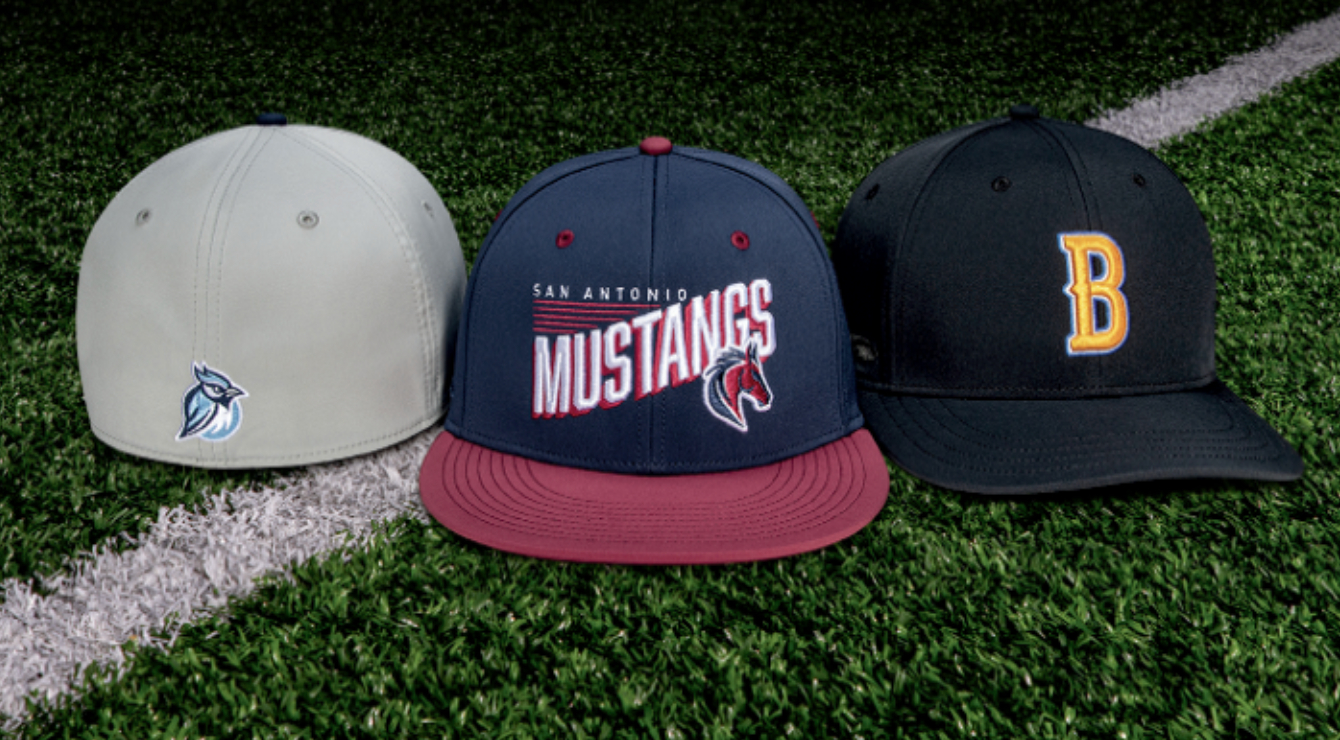
Let’s change the topic for a minute: What has been the impact of the uncertain and constantly changing tariff situation?
Hiskey: The tariff situation has been one of the most challenging environments we’ve navigated as a business — not just because of the cost impact, but because of the unpredictability. When tariff policy is shifting week to week, it becomes extremely difficult to quote customers with confidence, plan our business and make long-term sourcing decisions. For a company like ours, which collaborates with customers to design and manufacture truly original, custom products built to spec, you can’t simply swap out a supplier overnight.
Manning: Supply chains have shifted toward a more diversified, multi-country sourcing model to improve flexibility, identify cost efficiencies and offset uncertainty in the evolving tariff landscape.
Pille: This year has been interesting. A lot of the back-and-forth with changing tariff rates in 2025 has mainly settled since the Supreme Court ruling in February.
Finch: The biggest challenge has been uncertainty. Frequent changes make it difficult for suppliers, dealers and customers to plan inventory, pricing and purchasing decisions with confidence.
Kennedy: Tariff uncertainty creates challenges throughout the supply chain because it affects forecasting, pricing and inventory planning. Manufacturers are forced to make longer-term decisions without always knowing what future costs will be. That uncertainty makes planning more difficult for manufacturers, dealers and end users alike. We just have to be as forward thinking as possible and make sure we have multiple options from factories to countries of origin.
Kelly: We have experienced minimal impact with the volatile tariff situation. Our strong inventory position reduced impact for us.
Bradney: We continue to monitor the shifting sands of tariffs. We’re optimistic that we’ll continue to see signs of the dust settling in 2027.
Currier: As a company that provides headwear into several different business segments across multiple countries, we are not immune to ever-changing global politics. We’ve been in business long enough to know there are always going to be things out of our control. It’s all in how we handle it and execute.
.jpg)
On a related topic, let’s update our readers on the supply chain situation in 2026. What exactly is that situation for team headwear now and into 2027? Is it still an issue for you?
Bradney: While global stability can change overnight, we believe the bumps in the road will be smoother in 2027.
Kennedy: The severe disruptions we experienced during the pandemic have largely stabilized. Transit times are more predictable, inventory positions are stronger and manufacturing capacity has improved significantly. That said, global logistics costs, political uncertainty and tariff concerns continue to create challenges. Looking toward 2027, companies with diversified sourcing strategies and strong inventory planning will be in the best position to serve dealers consistently.
Currier: As an organization, we continuously look to diversify our supply chain and work with partners that can provide a wide range of solutions so we can better serve our customers. We look to uncover every viable option as a headwear provider so that we are the only ones that feel any pressures and our customers don’t.
Manning: We expect the geopolitical challenges will continue into next year and remain focused on our core initiatives to mitigate these headwinds.
Kelly: Fortunately, our supply chain has been stable. From fabric mills, to trim vendors to production, we’ve been able to navigate the global situations smoothly through partnership and communication. As we look at the coming months, we are confident we will continue to meet or exceed delivery.
Finch: The supply chain is in a much healthier position than it was a few years ago, with stronger inventory levels and more predictable lead times. That said, global sourcing shifts and tariff related uncertainty still require close attention. Going into 2027, reliability, inventory availability and speed to market will remain key differentiators.
Hiskey: The tariff volatility is ongoing and we are still operating in an extremely dynamic global trade environment. What’s changed is how prepared we are to navigate it. We’re continuing our sourcing diversification efforts in a careful and thoughtful manner. The other area we’re investing in heavily is speed to market.
.jpg)
Finally, where do you see the team headwear business headed into 2027 in terms of demand and styles?
Kennedy: We expect continued growth in premium headwear across team sports. Athletes today want products that perform on the field, but also fit into everyday lifestyle wear. I expect to see Increased demand for premium performance fabrics — more crossover retail-inspired styles, increased customization options as well as a continued emphasis on emphasis on comfort, fit, and versatility. The most successful products will be those that bridge the gap between team uniform headwear and everyday lifestyle apparel. Players want a cap they not only wear during games, they want one they can wear everywhere.
Bradney: For as long as teams are taking the field, premium on-field styles will always be in demand.
Finch: We expect demand to remain strong as consumers continue looking for products that combine performance, comfort and style. Retail trends will continue to influence team headwear, driving growth in rope caps, A-frames, truckers and premium performance styles. The gap between team headwear and lifestyle headwear will continue to narrow.
Kelly: With a focus on club and travel sports, we’ll see stronger demand for beanies and fanwear silhouettes. Ensuring headwear is part of the team look to and from the field will open new opportunities.
Currier: Ease of doing business, pricing, and availability will drive the business. Trend styles will continue to pop up The business that answers the call and can execute will always have the upper hand.
Cook: Performance snapbacks are making a strong comeback heading into 2027, particularly when combined with advanced features such as perforation, lightweight fabrics, moisture management and enhanced sweatband technology. We’re also seeing the continued blending of team and lifestyle trends. Consumers want products that perform on the field but also fit seamlessly into everyday wear. The brands that successfully combine performance, comfort and retail-inspired styling will be best positioned for future growth.
Hiskey: We believe 2027 will continue to be driven by the convergence of team, golf, lifestyle, and retail influences. Most importantly, team customers will continue to expect products that feel like premium consumer brands rather than traditional promotional products. The dealers who embrace that shift will be positioned to capture the greatest growth. The future of team headwear isn’t just outfitting athletes. It’s creating products that entire communities want to wear.


.svg)