

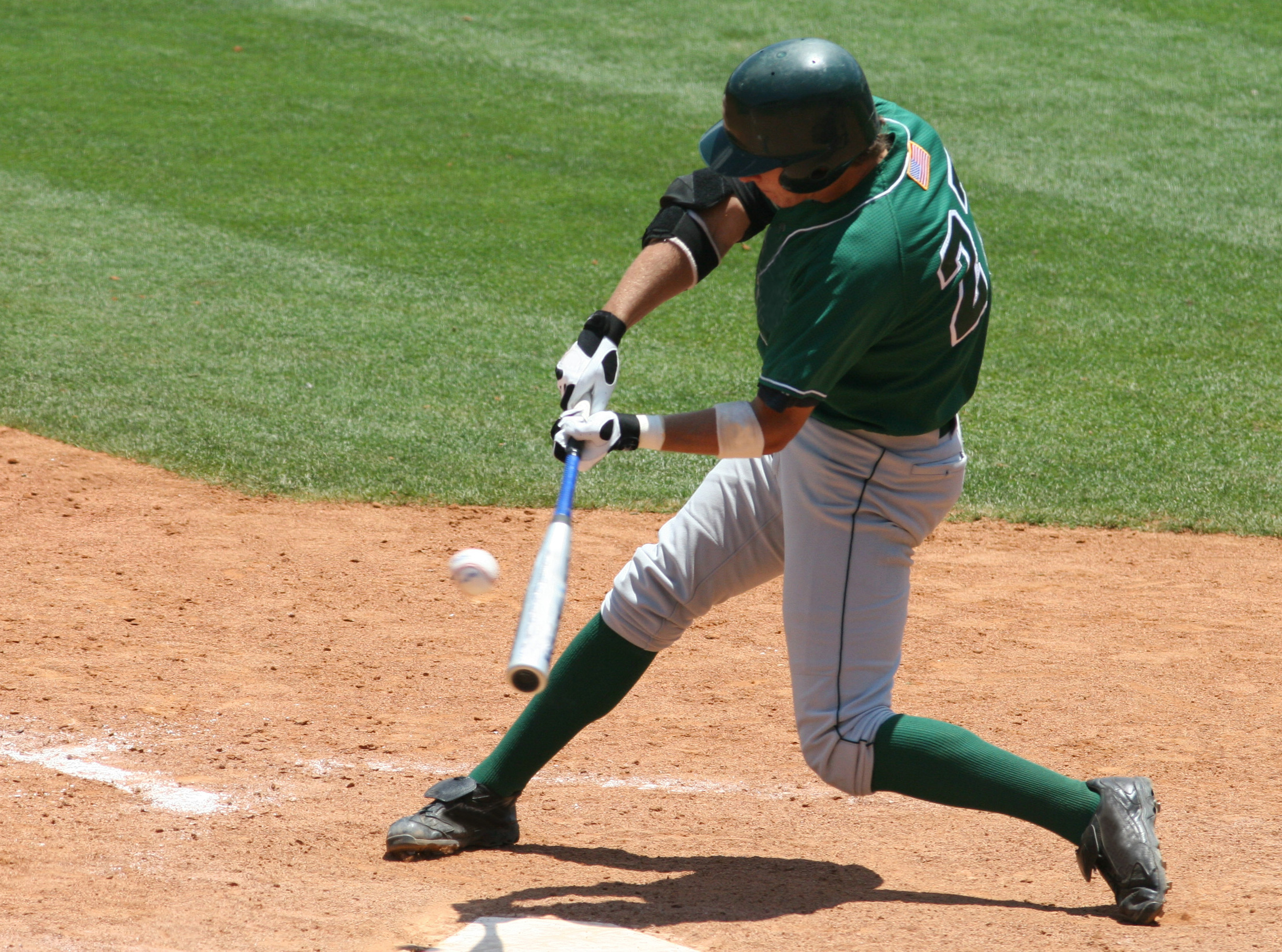
Although it’s the heart of winter in most of the country, springtime is drawing closer and America’s Pastime is again on the minds of team dealers, school athletic directors, players, coaches, leagues and travel teams. In 2024, total participation in baseball reached 17.3 million, an uptick of 3.8 percent from 2023 and a jump of 9.4 percent from 2019 to 2024, according to the SFIA 2025 Topline Participation Report.
In the youth market, the news is also positive. The NFHS reported that Baseball claimed the number three spot on its list of 10 Most Popular Boys’ Programs for the 2024-25 school year, trailing only Basketball and Track and Field, respectively.
To help grow the game at the youth level, many major baseball organizations, including MLB, USA Baseball and Little League International, are continuing their efforts in community outreach, equipment access, coaching development and inclusive programs, all aimed at making baseball accessible, safe and fun for diverse youth. And many of these efforts are finding new ways to prove the adage that diamonds are a girl’s best friend.
Little League International’s Girls With Game initiative, which launched in 2019, is still going strong. “The program is dedicated to honoring all the girls and women who have made the Little League program what it is today and those who inspire the future generation of female participants at every level,” states the organization. Each March, in coordination with National Women’s History Month, Little League celebrates its own women’s history with Girls With Game month across all its social media channels and at LittleLeague.org/GirlsWithGame.
MLB and USA Baseball are also doing their part to promote women’s baseball with the MLB GRIT: Girls ID Tour that will host five stops in 2026.The program is designed specifically for female athletes ages 18 and under. The event format is similar to a pro-style workout where athletes are evaluated on their talent. Top performers will be selected to participate in the Girls Baseball Elite Development Invitational, a one-week program geared toward providing elite training and instruction, as well as the annual Girls Baseball Breakthrough Series.
In other initiatives, MLB is continuing to invest money and resources into growing the game. For example, the Nike RBI program, Reviving Baseball in Inner Cities, is designed to provide kids ages 5-18 from underserved and diverse communities with equipment, training and access to camps. MLB Play Ball, a partnership with USA Baseball and USA Softball, encourages casual play and participation. MLB’s Pitch Hit & Run is a free event that provides boys and girls ages 7-14 an opportunity to showcase their skills while earning a chance to attend and perform during the MLB World Series.
The Breakthrough Series, a joint effort between MLB and USA Baseball, focuses on developing players on and off the field through seminars, mentorship, gameplay, scout evaluations, video coverage and high-level instruction, all while providing a platform for players to perform for scouts and collegiate coaches. Meanwhile, USA Baseball Fun At Bat is a free program bringing baseball fundamentals into elementary school physical education classes for kids in grades K-5.
In other developments, the Women’s Professional Baseball League (WPBL) is now on deck. Still in its early days, the league held tryouts and a draft in 2025 ahead of its inaugural season this August, which will feature four teams: Boston, San Francisco, Los Angeles and New York. It is the biggest attempt to organize pro baseball for women since the All-American Girls Professional League in the 1940s and ’50s. The new league has already signed substantial partnerships with media production house Freemantle, as well as iconic cap brand New Era.
Ready to Go Yard
From a team dealers’ viewpoint, the upcoming baseball season is looking solid. “Last season, sales were up and although it’s still early this year, we’re projecting we’ll do well,” says Keith Manning, owner of Jack Pearl’s Sports Center in Battle Creek, MI. “We’re pretty consistent in baseball and we’re busier in the spring than we’ve been in the past. More travel teams are popping up, which helps provide steady growth for us.”
More specifically, Manning says that travel ball is up – particularly 8U to age 14 – but recreation play is down a little bit. “Total participation is steady, but we’re seeing a shift from rec to travel. We’re also seeing more year-round play, fall ball and spirit orders for winter training and travel teams. Sales are now happening three to four times a year instead of just once,” he explains. “For travel teams, the top sellers are apparel and uniforms. For high schools, it’s equipment and training aids — the schools only buy uniforms every three to four years.”
At Oxford, OH-based Capitol Varsity Sports, baseball and softball are big business, especially regarding online stores. “Last year was okay. We had a little inventory left over — we didn’t sell through as many gloves as usual,” says owner Bob Fawley. “Now, travel and club baseball are dominating and are overshadowing Little League. A lot of little local community and rec youth leagues are suffering as travel and club teams continue to grow. But travel teams and clubs are big and they spend a lot of money. We got our baseball shipments in for this season and we went heavy in batting helmets.”
Fawley also reports that in his area, baseball seasons are running longer, and late-summer/fall ball are popular, especially for travel teams. “Travel ball has become very popular, but it’s challenging for kids that want to play other sports because there’s lots of overlap with other sport seasons now.”
For Dave Whipp, who with wife Becky co-owns Dave’s Sporting Goods in Vero Beach, FL, the baseball category is booming. The family-owned store, which was established by Whipp’s parents in 1973, is now turning 53. Whipp attributes part of his business’ recent success to its immediate proximity to a four-field sports complex located right behind the store, and to a girls’ Little League complex in the middle of town that serves more than 100 kids. The store relocated to its current site a couple of years ago.
“The upcoming season is looking very strong and being next to the field makes it easy for us. We’re doing lots of business with hardgoods, balls and bats,” he reports.
To better serve customers, the store has more than 120 glove models on the wall and 220 models in stock and glove oil and conditioner are kept near the register. To satisfy kids’ demands for customization, there’s a wood burner that’s used to burn names or initials into gloves and a hand engraver that can carve initials onto the ends of bats. “Kids all want their initials on gloves and we try to make it more exciting for them,” Whipp says.
Whipp has seen the local Little League blossom and currently 500 kids are registered. Although the girls’ league had fallen apart, it has managed to come back in the past two years. “Not everything is about travel ball. By getting the right people involved, we’re seeing more local play, and rec and local leagues are very strong here,” he says.
Whipp has also noticed that professional female baseball and softball players hold a lot of sway over young girls. “Girls want to emulate the clothing, equipment and style of the pro women and they want the same shoes, gloves and even hair ribbons that they see the pros using,” he says. “This will become more pronounced with big events such as the Olympics, and on social media.”
At Bashor’s Team Athletics in Portland, OR, the news is also positive. “Last season was good — we worked with 17 Little League teams, as well as high school and club teams, and more leagues have been added for the upcoming season,” says Christina Barrett, a sales and customer service specialist. “This year, we’re servicing about 20 Little League teams and participation within each team has also increased. Baseball participation is up in general and we’re seeing more youth baseball and more club teams.”
She adds that gloves and bats are doing well, especially because of the bright colors that kids love.
On the female side, Barrett is seeing a small increase in participation, but overall softball is growing faster than baseball for girls. She posits, “We’ll probably see more female growth on the youth side, and having a women’s pro league will help drive girls’ and youth participation.”
Across the country in West Lebanon, NH, baseball is a steady category for Stateline Sports. “Last season was very good and we’re hopeful for this year,” reports Bud Hill, who handles baseball buying for the retail part of the business. “We do glove relacing and glove repair and the season is already looking promising. We service retail customers as well as local rec programs, high schools and middle schools. Last fall we had some travel ball, which is new for this area, and we hope it’ll continue in 2026.” He adds that gloves and helmets are top sellers.
Budget & Margin Challenges
Many dealers have found that the environment is getting tougher when it comes to school and team budgets, and the problems are exacerbated by more manufacturers looking to sell direct to consumers online.
“Budgets are going down every year,” says Manning. “Teams and schools are relying more on boosters and fundraising. However, as long as vendors have everything in stock, we’re not having any problems. Forecasting sales is the biggest challenge, especially for equipment. Last year, we sold more baseballs than we anticipated, which is a good thing.”
For Stateline Sports, shrinking budgets are also a concern. “Tariffs and price increases are stressing everyone’s budgets,” says Hill. “Luckily, we haven’t seen any significant challenges so far for 2026. Baseball is a steady category for us and for the last couple of years it has been consistent, not growing but also not decreasing.”
Fawley agrees that high school budgets are under fire, but even more troublesome is the DTC situation. “Uniforms are the biggest challenge because there are too many import direct sublimators in China, Pakistan and Vietnam — they have low price points without a lot of margin. We have our own direct import source, but dealing with our domestic suppliers is really the way to go. You have more security and it’s easier to solve problems with domestic sources.”
As Fawley sees it, the main issue is that more manufacturers are going DTC and this hurts dealers. “Our inventory is substantially up across multiple sports and a lot of dollars are tied up on the shelf. It’s difficult to take the risk of bringing in too much, especially when manufacturers are undercutting dealers via DTC and lower pricing,” he says. “All of this cuts into margin and margin is king for survival. We never take our eyes off margin.”
On a positive note, “The supply chain has gotten pretty good recently. All of our deliveries arrived on time in early January and we’re doing a lot of quotes and pricing,” Fawley reports. “There’s no real uptick in any particular product category — we continue to hold our margins.”
For Dave’s Sporting Goods, manufacturers selling DTC is also a major headache. “Everybody thinks they know best so they go online to design their own caps and sublimated uniforms, often with less than stellar results. DTC sales and the Internet are cutting out the middleman,” laments Whipp. “The Internet makes everything more challenging — it’s all about price and service is going by the wayside for many companies. Fortunately, a lot of people still want to touch and feel the goods.” As is the case with most dealers, shrinking budgets are a challenge for Whipp, but offsetting this is the facwt that his business services a lot of private and charter schools that have healthy budgets, as well as booster clubs.
For Bashor’s Team Athletics, league budgets are healthy but there have been lots of cuts to school budgets, meaning that schools are buying a little less than in years past. While the supply chain is good, Barrett still sees a challenge in working with so many leagues and retaining the ability to accommodate everyone. “The growth has been nice with all the leagues and we’re seeing an upward trend in participation as a whole,” she says.
Baseball by the Numbers
Sales of baseballs totaled $64.7 million in 2024, up 0.4 percent from 2023. Also in 2024, sales of bats hit $339.3 million (up 5.8 percent from 2023); batting gloves climbed to $50.5 million (up 2.0 percent); glove and mitt sales totaled $203.2 million (up 1.8 percent); and protective/other sales dipped slightly to $125.6 million (-0.2 percent). Baseball team uniform sales hit $527.3 million in 2024, an increase of 5.6 percent from 2023, and a 34.3 percent rise from 2019 to 2024. In the baseball footwear category, sales climbed to $303.4 million, up three percent from 2023, and a spike of 9.8 percent from 2019 to 2024.
Families replace gear most often in baseball and soccer, according to the SFIA 2025 Team Sports Parents’ Insights report. “Sporting goods stores remain central to these purchases, but hybrid shopping – combining in-store and online – is most common, while online-only is less frequent,” states the report. “Affordability remains the primary concern for parents when making youth sports purchases, but it is not the only factor influencing their decisions. Access and convenience also play significant roles, with families seeking simpler ways to find, evaluate and replace equipment.” Total participation in baseball totaled 17.3 million in 2024, up 3.8 percent from 2023, and a rise of 9.4 percent from 2019 to 2024.
At the high school level, 116,110 schools offered baseball for boys (472,598 participants), and 1,342 schools offered the sport for girls (1,381 participants) in the 2024-25 school year. Baseball was also No. 3 on the list of 10 Most Popular Boys Programs, trailing only Basketball and Track and Field-Outdoor, respectively.
Out of 17.3 million total baseball participants in 2024, males comprised 80 percent and females the remaining 20 percent.
Interestingly, the biggest cohort of male baseball participants in 2024 was the 6-12 age group (400,577 players, accounting for 33.1 percent of all male players.)
On the female side, the largest group was the 25-34 set (900,000 players, accounting for 26 percent of all female players).


.svg)