

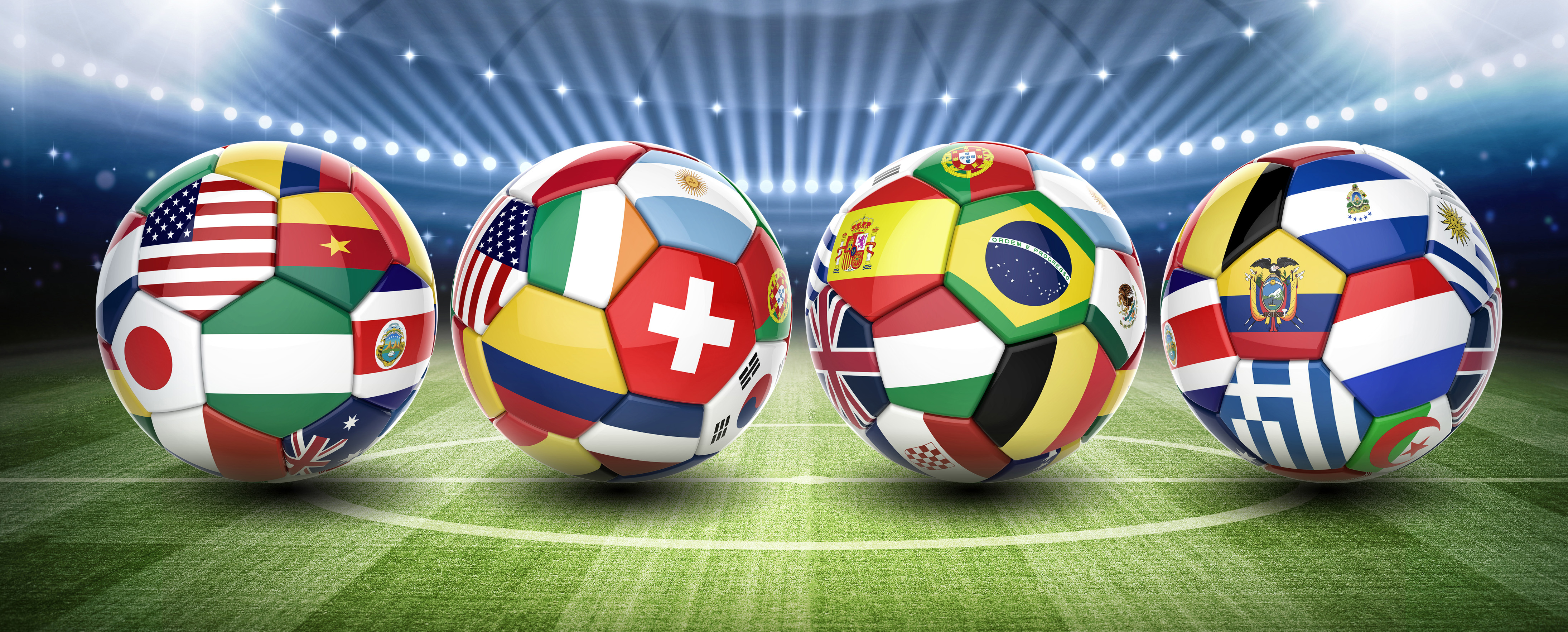
The 2026 FIFA World Cup in North America, which kicks off on June 11 and concludes on July 19, is poised to smash all revenue records, soaring to an unprecedented $11 billion to $13 billion, making it the most profitable edition in the event’s history. This is a nearly 50 percent increase over the $7.5 billion generated during the Qatar 2022 cycle, according to a report by sport marketing agency Sport Value.
The gap is even wider when compared to the 2018 iteration, which amassed revenues of $5.3 billion. The 2026 tournament, hosted jointly by the U.S., Canada and Mexico, will be the first World Cup staged across three countries on the same continent. The anticipated gargantuan revenue spike reflects the expanded format of the tournament, larger audiences and stronger demand across global markets.
Overall, broadcasting rights are expected to remain the biggest source of income, with TV deals projected to exceed $4.2 billion, a 24 percent jump from the 2022 tournament, according to the Sports Value report. Sponsorship revenues are forecast to reach $2.8 billion, up 59 percent, setting a new record. But the biggest leap is expected in ticket sales and hospitality, with anticipated revenues of $3 billion — equal to the combined ticket income of the past six World Cups.
Obviously, the hype machine is in full swing, but even without all the hoopla, soccer continues to do well in the U.S. But the “World Cup effect” – how heightened visibility and cultural attention influence soccer participation across age groups and formats – is yet to be determined.
“According to our 2026 Topline Participation Report, outdoor soccer participation grew 15.8 percent year-over-year in 2025, reaching 16.8 million participants, making it the fastest-growing team sport last year,” reports Jenny Karn, senior director of SFIA. “This is based on SFIA’s nationally representative study of 18,000 Americans ages six and older. More broadly, team sports were the fastest-growing category overall, increasing 6.9 percent year-over-year.”
Karn notes that on the sales front, SFIA’s Manufacturers’ Sales by Category Report shows continued strength on the business side. In 2025, wholesale sales for soccer equipment (including balls, protective gear and accessories) increased 4.2 percent year-over-year. Soccer uniforms grew 7.5 percent, while soccer footwear rose 4.7 percent— clear indicators of sustained demand across the ecosystem.
“With the World Cup returning to the U.S. for the first time since 1994, we expect this momentum to continue accelerating,” says Karn. “As part of SFIA’s 2024WARD Campaign – designed to capitalize on a historic decade of global sporting events – we’ll be closely tracking how events like the World Cup translate into long-term participation growth and industry expansion.”
Don’t Touch That Dial
The 2026 FIFA World Cup is projected to reach a record-breaking global audience of six billion viewers, making it the most-watched sporting event in history, surpassing the approximately five billion people who engaged with the 2022 tournament in Qatar. In comparison, the Olympic Games attracted two billion viewers, and the UEFA Champions League had 380 million.
Forbes points out that the main factors driving the surge in viewership include the tournament’s expanded format that features 48 teams (up from 32) and 104 matches (up from 64), providing 40 additional games. Having three host nations creates a massive local market and friendlier broadcast windows for the Americas.
At the same time, soccer interest in the U.S. is at an all-time high, with the 2026 event expected to draw over 29 million multicultural fans in the U.S. alone, particularly from Hispanic and Black audiences. This level of diversity helps set the World Cup apart from the Super Bowl, the NBA Finals — or any other sporting event for that matter.
And while traditional broadcast remains dominant, digital engagement is skyrocketing. In the U.S., digital live sports viewership is expected to reach 137 million by 2029, with the World Cup acting as a primary catalyst for this shift.
On the Money
By all accounts, the amount of dough associated with the 2026 FIFA World Cup is staggering, and of course brands and marketers want in on the action. Yet, despite large audiences, rising rights fees and expanding sponsorship packages, the World Cup’s measurable contribution to ad growth appears to be weakening, finds WARC Media in its latest global advertising trends study.
While the event is expected to inject $10.5 billion into the ad market, advertisers are no longer competing within a single commercial surface, but are having to engage with fans across diverse touchpoints beyond traditional broadcast rights.
“This World Cup is no longer just about live matches — brands will engage with fans across touchpoints before, during and after matches have concluded,” states Alex Brownsell, WARC Media’s head of content. “Media plans will include platforms that benefit from the conversation about the World Cup without the burden of bidding for rights — from creator content to podcasts, turning conversations around the games into powerful opportunities for connection and impact.”
Annual advertising spend growth during World Cup years is inconsistent, driven more by broader economic cycles than tournament cycles. Even for host markets, the tournament does not guarantee market-level acceleration or outperformance, according to WARC Media.
In the U.S. – where soccer competes with popular domestic sports – the World Cup’s effect on ad investment is modest and inconsistent. In most positive years, the impact has been between 0.4-1 percent of total ad spend. Annual ad spend for Mexico, and a similar pattern is visible in Canada, shows no consistent pattern of acceleration in World Cup years. WARC Media’s forecast of approximately +4 percent for Mexico is positive, but not exceptional, for a host market.
WARC also reports that audience fragmentation will be further highlighted during this World Cup as attention shifts beyond the games to the conversations around games.
For example, TikTok has become a FIFA partner and will show behind-the-scenes footage. YouTube, also a preferred platform, will stream live matches from media partners, and platforms such as Netflix are looking to monetize the conversation around the games through video podcasts.
While tournaments drive TV and Out of Home advertising (OOH advertising refers to billboards, transit ads and street furniture), premium pricing often displaces regular advertisers, with gains reflecting spend redistribution rather than market expansion. In the U.S., 37 percent of Americans expect their interest in soccer to increase over the next 18 months, supporting positive momentum ahead of the 2026 FIFA World Cup.
While advertising and marketing dominate much of the monetary conversation, the World Cup is not merely a sporting event — it is a seismic shift for the North American hospitality landscape, according to hotelbusiness.com. For hotel owners and management companies, the event represents a golden opportunity to showcase the very best of American hospitality to a global audience.
While the potential for record-breaking ADR [Average Daily Rate] growth is undeniable, warning signs – including significant visa barriers, softening of inbound travel and the delicate risk of displacing loyal year-round business – require a tactical playbook that is as agile as it is disciplined.
Across U.S. markets, the tournament is projected to generate roughly $900 million in incremental hotel room revenue —comparable to hosting 10 Super Bowls within a six-week period. Vancouver is among the most expensive host cities with average rates of $1000 to $2,000 per night. Meanwhile, other cities, such as Seattle, have lowered their overall economic impact forecasts due to lagging bookings.
In fact, Yahoo! Finance reports that hotels in 11 U.S. host cities are slashing room rates after the demand they anticipated failed to arrive. “FIFA has already begun cancelling tens of thousands of reserved hotel rooms across the country, and industry insiders are pointing to a surge in anti-American sentiment – fueled in part by the current political climate – as a major driver of the shortfall.”
Nevertheless, there are many rumblings in the press and on the Internet regarding price gouging, with some of the most surprising and infuriating examples coming from unexpected places.
For instance, New Jersey Transit plans to charge $150 for round-trip trains between New York’s Penn Station and MetLife Stadium — more than an 11-fold multiple of the usual $12.90 ticket. The New York/New Jersey host committee also laid out an alternative price plan for bus service to games, which will cost $80 per passenger. Neither service will offer reductions for children, seniors or disabled passengers.
Similarly, Boston’s MBTA will charge fans $95 for round-trip bus service between the center of Boston and Gillette Stadium during the World Cup — quadruple its usual prices. Moreover, Official FIFA parking spaces for the matches at Gillette Stadium are $175 for cars (including accessibility parking) during the group stage, rising to $220 for the round of 32 game and $270 for the quarter-final game. For oversized vehicles, it is $600 in the groups, $780 in the round of 32 and $980 in the quarter-final. Yikes.
In the final analysis, it will be interesting to see how the projections compare with the reality.

What’s In It For Team Dealers
While sporting goods dealers – including soccer specialists – are understandably optimistic about the long-term impact of the 2026 FIFA World Cup, especially regarding upticks in future participation in the sport, there is still a healthy dose of skepticism.
“We don’t expect much of an impact on our business, primarily because we don’t sell replica jerseys or pro cleats,” says Keith Manning, owner of Jack Pearl’s Sports Center in Battle Creek, MI. “World Cup has a little bit of an impact on youth participation people get excited and it gets younger kids involved, so there is positive impact. For us, World Cup is an event that comes and goes. There will likely be an increase in youth programs, but it’s up to those programs to maintain momentum year after year.”
In Manning’s view, the more exposure soccer gets, the better. “World Cup helps the soccer category, and it has more positive than negative effects.”
At California Pro Sports in Harbor City, CA, owner Kim Karsh also believes the event’s impact on his business will be small.
“The problem is that licensees are not offering product to smaller stores. We’re also having a hard time getting adult soccer shoes. Under Armour, Puma and Umbro are all out of stock — it’s bizarre at this point,” he comments.
“I don’t expect a lot of impact on our team business,” Karsh continues. “World Cup will be great for soccer fans, but it isn’t going to influence an immediate change of traditional uniform looks. There are lots of restrictions at the high school level. But at the club level, the World Cup could instigate some newer, flashier looks for teams down the line.”
Nevertheless, Karsh believes that World Cup is good for soccer. “Events like World Cup keep the sport on everyone’s mind and will help continue to drive demand for soccer. Once there are events here in Los Angeles, we’ll start getting calls for stuff. If we get access to USA jerseys and the like, we’ll definitely bring some in. We’re hoping for some increases, but we’re not going to rely on it.”
Meanwhile, at Soccer Locker in Miami, FL, president David Zighelboim sees both upsides and downsides.
“The craziness hasn’t started yet — it begins on the first day of the World Cup when your country’s playing. World Cup always spikes our business and a World Cup summer is big every four years.
“But this one is not as impactful as prior World Cups due to accessibility of World Cup jerseys and product,” he explains. “There are more retailers involved now, such as big-box stores and online entities, and consumers have more vendors to choose from. Retail buyers got smart and jumped on the World Cup bandwagon, so it’s open season for all retailers—not like back in the day when soccer specialty was the only game in town for World Cup merchandise.
“As a result, I won’t have as big a World Cup business as in past years.”
However, Zighelboim points out that Soccer Locker does a lot of customization. “We have country jerseys and we have the player name sets, so we can create on demand. The consumers that watch World Cup are predominantly adults, so we sell a lot more adult jerseys, especially when they’re on their way to a game.”
While he believes participation may increase on a casual level –primarily adults who watch games and then get inspired to go out and kick a ball around or play a pick-up game – he doesn’t think the World Cup will do a lot to spur immediate youth participation, particularly since 2026 fall season tryouts were held in May.
Zighelboim is also concerned about some of the negative press surrounding pricing at the event. “Miami is hosting seven games and no one can afford to go. This World Cup is totally different because the average guy can’t afford to take his family. It’s abusive,” he laments.
“There are no more paper tickets, so there is online price surging. Paper tickets had a face value, but that’s not really the case for e-tickets, which could end up costing anything based on supply and demand. Plus, the lottery system is extremely complicated. However, demand is so great, FIFA will fill the seats.”
In January 2026, Cincinnati-based Soccer Village, which operates eight stores across Ohio, Kentucky, Indiana and Tennessee, merged with Mt. Pleasant, SC-based Lloyd’s Soccer, with three stores in South Carolina and one in Atlanta, GA, thus creating Soccer Village Lloyd’s, a 12-store soccer retail powerhouse. The new entity is now one of the largest private soccer specialty retailers in the U.S., combining local expertise with national-scale logistics.
Mike Walter, Lloyd’s Soccer general manager, is confident that the World Cup will have a huge impact on the business.
“There’s a lot of buzz around the World Cup and it always helps our summer business,” he says. “Because it’s in the U.S., we’ll get more casual fans buying things from us, as well. We carry jerseys from 48 countries, and because the jerseys are so cool now, the customer base will increase for a short period of time.
“For this reason, we have to expand our local market a bit — we’re literally a grocery store for two months! Everybody shops here. We have to spread the message about having authentic gear, particularly since there is lots of knock-off merchandise on the market.”
Regarding specific product, “The World Cup balls [from Adidas] launched in December, along with lots of collector items such as mini ball sets, and they did great at Christmas,” Walter says. “USA jerseys are always successful, too, and there are some super fans that like to buy product as soon as it becomes available.”
He also points out that lots of non-sports businesses such as grocery stores, gas stations and financial institutions will be offering World Cup merchandise and conducting giveaways, so it’s important to take the opportunity to sell to the casual fan.
“On the apparel and retail side, we have a two- to three-month window to bring in product and get rid of it,” Walters explains. “We have an opportunity to sell through a lot of stuff, which makes for an interesting buying strategy. We don’t want to be out of something during the first week of the World Cup, but we also don’t want to get stuck with product at the end of the event. Atlanta will be hosting games and we have a store there. The goal is to sell out, and the challenge is to guess which teams will be successful.”
From a participation perspective, Walter believes that local team numbers will increase in 2027, a year following the event. “Soccer is pretty significant now, so the World Cup might not have much of a long-term impact beyond participation. The more kids you have playing, the more shoes, uniforms and equipment you sell. The 5- to 8-year-old group should increase in 2027. Here in the South, there’s been a population boom, so participation is growing regardless.”
He adds, “The World Cup is a world event that America is finally excited about and in the U.S. it will attract more eyeballs. There’s lots of country pride and passion at the games, which is pretty amazing.”
Kicking Off
The 2026 tournament, hosted jointly by the U.S., Canada and Mexico, will be the first World Cup staged across three countries on the same continent. The matches will take place in 16 cities.
The U.S. will host games in 11 cities:
• Atlanta (Mercedes-Benz Stadium)
• Boston (Gillette Stadium)
• Dallas (AT&T Stadium)
• Houston (NRG Stadium)
• Kansas City, MO (Arrowhead Stadium)
• Los Angeles (SoFi Stadium)
• Miami (Hard Rock Stadium)
• New York/New Jersey (MetLife Stadium)
• Philadelphia (Lincoln Financial Field)
• SF Bay Area, CA (Levi’s Stadium)
• Seattle (Lumen Field)
Mexico will host games in three cities:
• Guadalajara (Estadio Akron)
• Mexico City (Estadio Azteca)
• Monterrey (Estadio BBVA)
Canada will host games in two cities, and marks the first time the country will host matches for the Men’s FIFA World Cup:
• Toronto (BMO Field)
• Vancouver (BC Place)
FIFA World Cup 2026 By the Numbers
The massive 2026 FIFA World Cup audience is expected to generate unprecedented revenue and activity.
The tournament is poised to shatter all revenue records, reaching an unprecedented $11 billion to $13 billion, making it the most profitable edition in the event’s history.
A record-breaking global audience of six billion viewers is expected to watch the competition.
FIFA expects more than five million fans to attend the tournament’s 104 matches in person, surpassing the attendance record set at USA ’94, the last time America hosted the World Cup.
FIFA’s marketing rights alone are budgeted to generate between $1.8 billion and $2.8 billion during the cycle.
Broadcast rights are estimated at $4.3 billion.
Sponsorships are projected to reach $2.8 billion.
The event is predicted to drive $10.5 billion in ad spend.
Ticket sales are anticipated to generate $3 billion — more than triple the amount from the Qatar 2022 event.
Sports betting will soar, with analysts anticipating roughly $35 billion to flow through global betting markets during the month-long tournament.
The move to a 48-team format (104 matches) has significantly increased “inventory,” allowing FIFA to sell more ad space and frequency to global brands.
Brought to You by...
The FIFA World Cup 2026 sponsor roster is impressive and boasts a lineup of partners across three tiers. Tier 1 FIFA Partners have global rights across all FIFA competitions. Tier 2 FIFA World Cup 2026 Sponsors have global rights for 2026 only. (Notably, Tier 2 sponsorship deals typically range between $65 million and $95 million, while top-tier partners invest significantly more.) Tier 3 is comprised of regional suppliers and supporters.
Tier
1: Adidas, Coca-Cola, Hyundai-Kia, Visa, Qatar Airways, Aramco, Lenovo.
Tier
2: AB InBev (Budweiser), Bank of America, Frito-Lay (Lay’s), Hisense, McDonald’s, Mengniu Dairy, Unilever (Dove Men+Care), Verizon.
Tier
3: Airbnb, American Airlines, Diageo, The Home Depot, Rock-it Cargo, Valvoline


.svg)