


I am disappointed that we still have to address this, but what impact has the tariff uncertainty had on the segment as a whole in 2026?
Steve Vogelsang: Tariff uncertainty is still creating friction, even if it’s not as disruptive as it was a few years ago. For goals and net systems, where steel, aluminum, and imported components are core inputs, the lack of clarity makes it difficult to plan pricing and inventory with confidence. At the dealer level, we’re seeing more cautious buying behavior. Dealers are balancing the need to have product on hand with the risk of price swings, especially heading into seasonal peaks. The bigger issue isn’t just the tariffs themselves, it’s the unpredictability. It creates a ripple effect across the channel, from sourcing decisions to quoting timelines to overall margin management.
Chris Livingston: For the most part, the uncertainty seems to have gone away and now we all have to adjust to the current tariffs. Fortunately, we manufacture 95 percent of our products here in the US so the tariffs have had less of an impact on us.
Sammy Huntley: Given that China remains the primary supplier and manufacturer for this segment, the impact of tariff uncertainty has been significant. It has created a volatile environment for planning and pricing across the entire industry.
Neal Halvorson: Just when you think you have it figured out, things change as evidenced by the recent Supreme Court ruling on the legaility of those tariffs.
Russ Schirmer: Since we make our nets in Two Rivers, WI, with nearly all U.S.-made materials, it has affected our competitors that carry imported products much more than us. We had to surcharge our customers for the steel cables used in court nets, but that has now been removed.
Brent Ogle: The overwhelming majority of our product is manufactured domestically in our own facility. That has really allowed us to avoid most of the uncertainty and not have to pass along heavy price increases to our dealers. For the small amount of product that we do import, the uncertainty for us was over in 2025, for the most part. It was rocky for the later half of 2025, but we were able to adjust in time to be prepared for the start of 2026.
How has your company responded to it?
Livingston: In 2025, we had to implement a small surcharge to help cover the additional costs, but we were able to drop it for 2026 after we increased our production efficiency.
Huntley: We’ve made a conscious effort not to increase prices in direct proportion to tariff hikes, recognizing the high price sensitivity within this segment. Furthermore, since many competitors held overstock in this category, price growth in the market remained somewhat tempered and we focused on maintaining our competitive edge while absorbing some of the costs.
Schirmer: The cost of the tariffs was passed down the food chain to us, then to our dealers and then on to their customers. Since the tariffs were deemed unconstitutional, there’s supposed to be a refund that magically trickles down, but does that even make it to us? Doubtful.
Ogle: We continue to push as much manufacturing as we can to our own factory.
Vogelsang: We’ve taken a pretty disciplined approach. First, we’ve worked to diversify sourcing where it makes sense, while continuing to invest in domestic manufacturing where we can control quality, lead times and cost stability more effectively. Second, we’ve stayed very intentional around pricing. We’ve also leaned into closer collaboration with our key dealers. The more visibility we can share around cost trends, lead times, and product availability, the better they can plan their business.
Halvorson: We will continue to monitor these developments as they happen and try to keep our customers informed as it relates to pric-ing and inventory.
Have supply chain concerns been alleviated for your raw materials?
Vogelsang: Things are much improved. Lead times have normalized and supply is generally reliable. That said, volatility hasn’t disappeared. Steel and aluminum pricing can still move quickly, and some imported components remain exposed to trade policy and geopolitical shifts. So, while the disruptions have eased, we’re still operating with more flexibility and redundancy than we did pre-2020. The result is a more resilient supply chain, even if the environment remains a bit uncertain.
Ogle: For the most part, yes. We have experienced some supply chain issues that have put pressure on our timelines to produce for customers, but we have been able to handle them and take care of our customers.
Halvorson: We increased inventory levels on most of our products in addition to having them ready earlier for their respective sea-sons. We anticipate being able to supply our dealers and ultimate-ly their customers with on-time delivery.
Livingston: We never really had many issues with raw materials, so it’s been business as usual.
Huntley: While we explored alternative materials to mitigate supply chain risks, safety remains our number one priority. We decided against switching to cheaper or less reliable raw materials that could compromise the safety, durability or lifespan of our goals. Quality consistency is something we refuse to sacrifice.
Enough of those negative issues. What were the positives for the goals/nets business in the past year?
Halvorson: Our ProCage Batting tunnel nets continue to be an industry leader in that market segment, and we saw nice growth with our deal-ers in the Practice Partner line of soccer & hockey goals.
Huntley: The most positive trend has been the continued growth in demand for school and recreational team sports products. Additionally, we’ve seen a notable surge in personal use purchases, particularly for portable and mobile goals and nets, as families look to bring the team sports experience home.
Livingston: Overall, we had a great year thanks to our partners that sell our equipment. The basketball category is our biggest, but we had a very strong year for volleyball and soccer.
A hot topic with goals has been versatility — the ability for product to either be used for multiple or to be transported easily. Has that been anyfocus of your product development?
Huntley: Actually, we’re observing a global shift toward niche specialization rather than broad versatility. Today’s customers are looking for products that meet very specific, targeted needs. Because of this, all-in-one versatility is becoming less of a priority compared to equipment that is perfectly optimized for a single, specific sport.
Livingston: We’re always looking to be innovative and bring new products to the public or improve existing products. We had been getting requests from court owners to make tennis posts to be used for pickleball, so we did just that.
Halvorson: When it comes to equipment, portability and safety are expected to remain central drivers of product development — particularly as multi-use fields become increasingly common. Ball stop systems, for example, are gaining traction as facilities adapt to accommodate multiple sports at once, enabling more teams to practice simultaneously and make better use of shared space.
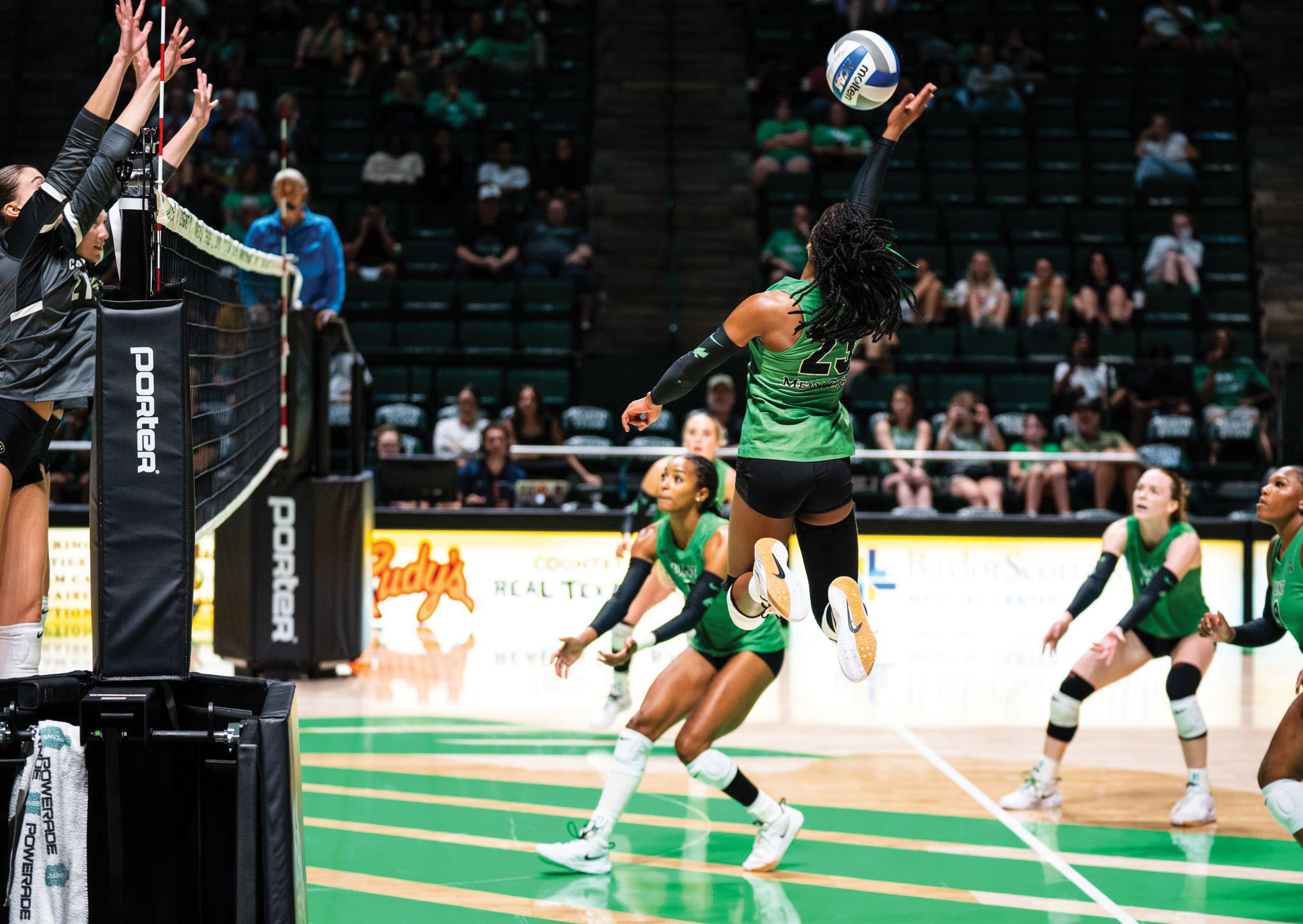
Nick McHale: We continue to see the volleyball market head towards lightweight systems. It started in the collegiate market and has quickly trickled down into the high school and even Jr High volleyball facilities. This is no surprise as the systems of old could weigh in excess of 50-60+ lbs and take a team of athletes to set these up before their practice. Now with poles under 20 lbs each, you can trust that the court can be set up quicker and safer than ever.
Cunningham: Facility netting is the perfect solution for mutliple sports’ needs.
When ADs, coaches or facility managers come to you for product, what are their key issues? Price, convenience, versatility?
Livingston: I’d say from their perspective, in most cases, it would be price.
Halvorson: It’s a combination of all 3 of those factors, with availa-bility as another driving factor. Lowest price doesn’t help a cus-tomer if they can’t get it for 10-12 weeks. So, the goal is to find that sweet spot where all those factors come together to encour-age a customer to purchase from you.
Ogle: ADs and coaches are typically price-sensitive, especially at smaller schools. We need to be competitive to be in the conversation.
Huntley: Price and longevity are the two most critical factors. Athletic directors and facility managers aren’t just looking for a quick fix — they want to solve a need for the long term. Quality plays a huge role here — they want equipment that lasts many seasons, not just one or two.
Cunningham: Each one has a specific pain they are looking to solve. Our job as sales reps is to interview our potential customer to find out what THEY need and then create the solution to solve that pain.
McHale: Age, weight and maneuverability of current volleyball systems or portable backstops are the starting point. Reliability and trust in existing equipment is what brings people to us, budget is always a factor.
Schirmer: When they come to us, they’re coming for quality and customization. Price is always a concern, but when amortizing their costs on a yearly basis their decision is usually made to buy the superior quality product. Not only does it last longer, but the labor to install and remove netting is reduced dramatically.
Please provide some advice to team dealers how they can sell and deliver more goals and nets to their schools and programs?
Cunningham: Ask questions and then listen. Approach your ADs, coaches and facility directors with a curious mindset to learn what needs they have. Hear them when they describe their situation, follow up with inquisitive questions. When you’ve heard what their specific needs are look for solutions to answer those needs. This is a full-proof way to separate yourself from your competitors and to create long-term customers.
Schirmer: Dealers should always be working with the schools to review their nets and goals for potential replacement or additions. Good old consultative approach. Never fails.
McHale: Ask, ask, ask. Put on your doctor’s hat and do your best job of identifying customers’ pain with their existing equipment. Dive into that as wholistically as you can.
Livingston: Our dealers are pretty smart and probably don’t need much advice on how to sell goals and equipment. However, what I would say is that they should not be afraid to ask us to get involved to help with technical questions.
Huntley: Continue to take advantage of our one-stop shop capability; when it comes to field equipment for baseball and softball.
Halvorson: For team dealers, a proactive, year-round approach to community engagement is es-sential. Connecting with schools, churches, and recreational departments shouldn’t be limited to the competitive season; it should span the pre-season, active play and the months that follow. By investing in these ongoing relationships, deal-ers can establish themselves as the trusted, go-to resource for equipment needs. That consistent presence not only deepens community connec-tions but also builds customer loyalty.
Finally, what is your outlook for the Fall 2026 season?
Livingston: Coming into 2026, we weren’t quite sure what to expect so we were fairly conservative with our goals. But, after the first quarter, we’ve been pleasantly surprised. So, if current sales are indicative of the rest of the year, the fall should be good for our dealers.
Cunningham: We are blessed to have the most caring, hard-working, loyal team dealers representing our products every day to every facility. Because of that, our outlook for Fall of 2026 is high.
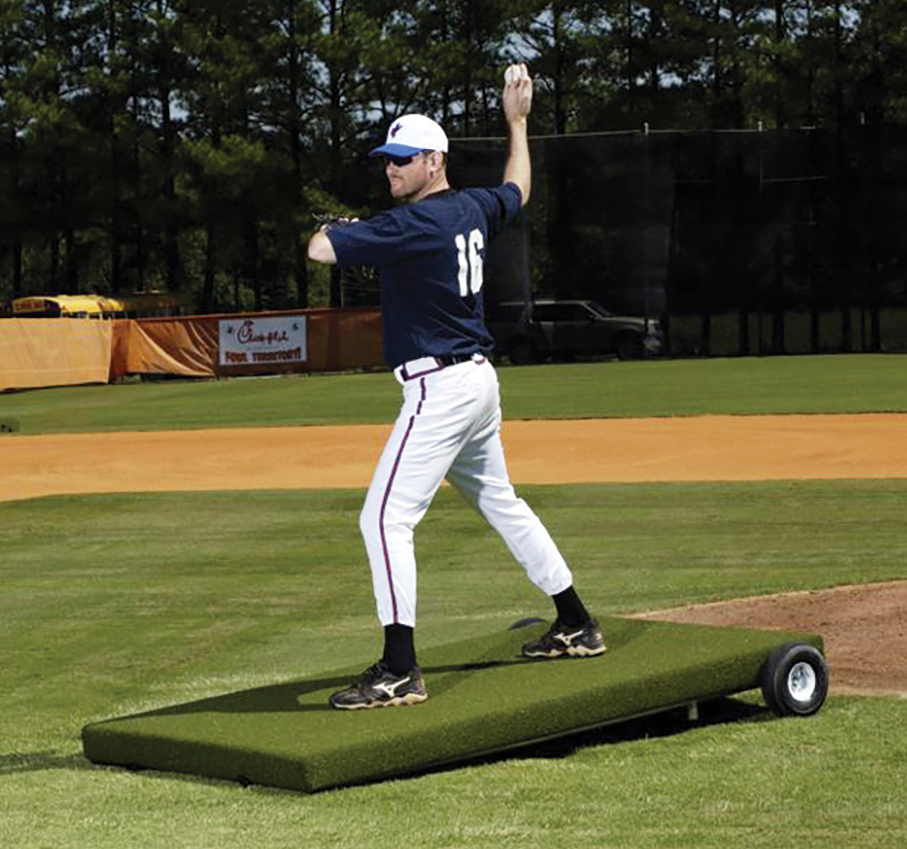
Halvorson: With our recent acquisition of Proper Pitch Mounds, we have seen a great start to 2026. We anticipate having plenty of inventory and being able to meet the expectations of our cus-tomers.
Ogle: We are planning for a busy fall volleyball season and we think the gym wall padding market has a lot of potential this year.
Schirmer: We feel good about the fall season so we’re building inventory of nets for quick delivery.
Huntley: We’re very optimistic. We see a clear trend where school programs and leagues are moving away from budget-first disposable equipment toward long-term investments. With the continued growth in youth sports participation, facilities are under more pressure than ever and they need gear that can withstand heavy, daily use. My advice for the season: focus on specialization. Instead of trying to find one goal that does everything, help customers find the perfect goal for their specific environment. The market is shifting from “one size fits all” to “built for purpose.”


.svg)