

Innovation is afoot, with textile industry breakthroughs coming from unlikely places. While some firms are thinking big, others are making updates to existing ideas for more a meaningful, and sustainable, impact.
At the root of sustainability is the notion of slimming things down and optimizing. So why not combine two functional benefits into one larger offering? Livinguard’s Better Fresh technology offers a two-in-one advantage: odor control and decreased microfiber shedding. The Swiss material science company’s technology absorbs and neutralizes odor at the molecular level with biocide-free and heavy-metal-free mode of action. The result is “unmatched wash durability (texted up to 100x home laundries),” according to John Mitchell, head of sales for the Americas at Livinguard Technologies.
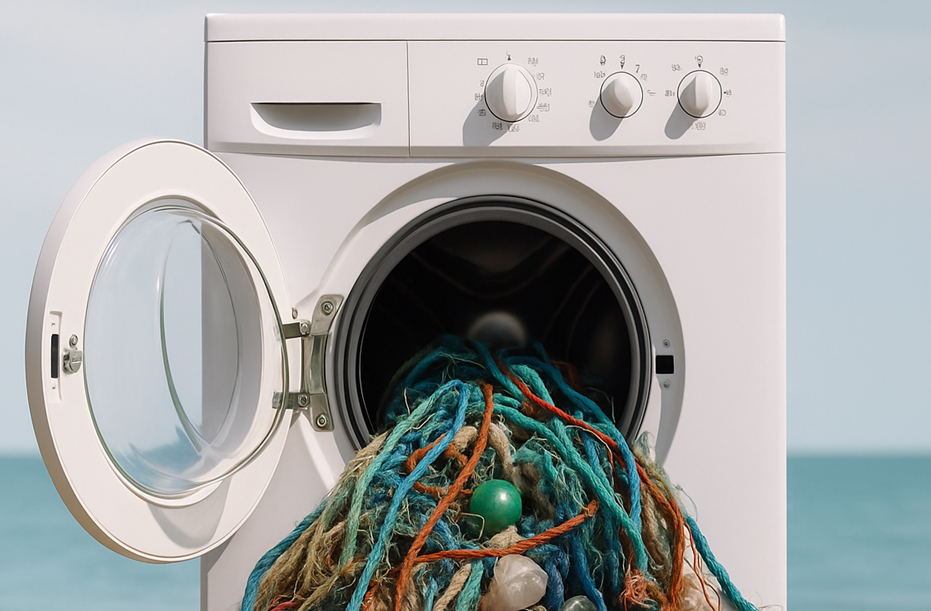
Livinguard Better Fresh utilizes an odor trapping and mitigation approach allows polymers of different lengths to wrap around the fibers and reduce the shedding of microfiber fragments during washing. The gain is reduced shedding with up to 95% lower discharge of microfibers during household washing.
In comparison, Polygiene’s new OdorCrunch2.0 is positioned as a next-generation odor capture technology designed to significantly reduce odors in apparel and textiles. Nick Brosnan, Marketing Manager Americas for Polygiene stated that the technology “employs a proprietary blend of polymers that alter the fabric surface’s affinity for odors, effectively binding and retaining them so they are less likely to be released during use. Unlike solutions relying on heavy metals, which target the inhibition of odor-causing bacteria, OdorCrunch2.0 addresses the odors directly, rather than the microorganisms.”
The technology also delivers enhanced odor absorption across more materials, including lightweight 100% polyester, blended constructions, and natural fibers. Polygiene OdorCrunch2.0 can also be used in garments that are not easily or frequently washed, or require dry cleaning, for freshness even when apparel is cleaned less often.

Digitized Design
At Li & Fung, Emilie Ho led digital transformation across product development, sourcing, and quality for major U.S. retailers and global manufacturing partners. “I saw how fragmented the first mile of the supply chain was, with designers, sourcing teams, and factories operating in disconnected systems,” she said.
Ho explained that “when ideas are not translated clearly, the result is wasted samples, misalignment, excess inventory, and slower speed to market.” Millions can be spent on physical prototyping before a product ever comes close to market.
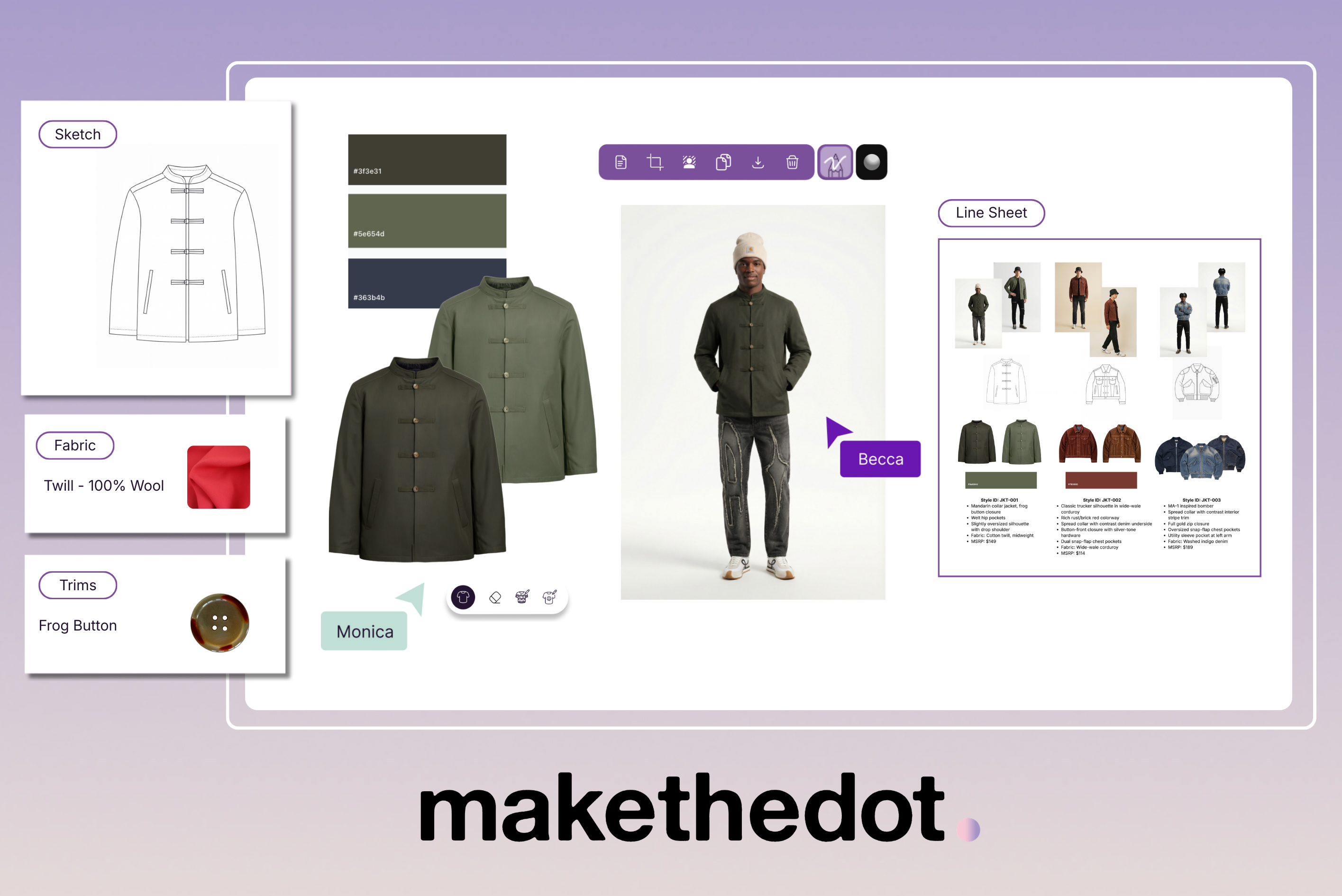
Ho founded Make the Dot in 2022 to digitize design, material selection, and sampling so teams can iterate at software speed and make better decisions, faster. To build collections, designers select precise inputs and the platform generates photorealistic imagery with accurate fabric texture. The firm digitizes materials with data including construction, weight, composition, finish, and price. “Designers are selecting actual, sourceable fabrics that can move directly into sampling and production,” she commented. Make the Dot works with partners including Fabscrap, Deyao Textile and High Fashion Group.
Because design intent is clear from the start, alignment with merchandising and sourcing happens earlier in the process. Back and forth conversations are reduced and lead time is shortened. Digital samples can flow directly into sales presentations, marketing and e-commerce. Brands can show a few physical garments at meetings for hand feel, but show full collections online – and obtain instant feedback.
In turn, the exec noted, “fewer physical samples across concept, development, and selling stages mean lower material waste, reduced shipping emissions, and a smaller chemical and water footprint, alongside faster and more informed decision making.” Make the Dot works with licensees and wholesale partners developing product for brands such as Volcom, Ben Sherman, and private label programs like No Boundaries and Scoop at Walmart, as well as teams supporting Lands’ End.

Scaling Next Gen Materials
The Gotham Foundry Innovation Hub in was founded 2025 to support early-stage tech companies in R&D efforts to create new sustainable materials for fashion, food, packaging and medical devices. The New York City Economic Development Corporation (NYCEDC) announced the consortium to be comprised of Columbia University, the Advanced Science Research Center at the City University of New York’s Graduate Center (ASRC), the Fashion Institute of Technology at the State University of New York (FIT), and community biolab Genspace, who were together awarded $45 million to operate the incubator in New York City.
TomTex founder Uyen Tran is a part of the project. “As an entrepreneur, my involvement with Gotham Foundry centers on sharing my firsthand experience in building a sustainable business to help new founders navigate the ‘valley of death,’ the high-risk gap between a lab prototype and market-ready product,” commented the exec. “Establishing a materials startup is difficult due to the lack of affordable, specialized manufacturing space out there, coupled by technical hurdles of meeting industrial standards,” she continued.
Casey Lardner, PH.D. is executive director at GenSpace, where students and designers can take classes, attend events, become an artist in residence or work in the biolab on independent projects. “If you are upset that your clothes are made out of plastic, this is where you can do something about it,” said Lardner during a seminar about Gotham Foundry at Texworld NYC Winter 2026. Projects worked on or discovered at GenSpace have the ability for a larger stage, thanks to the incubator.

Carbon Negative Textiles
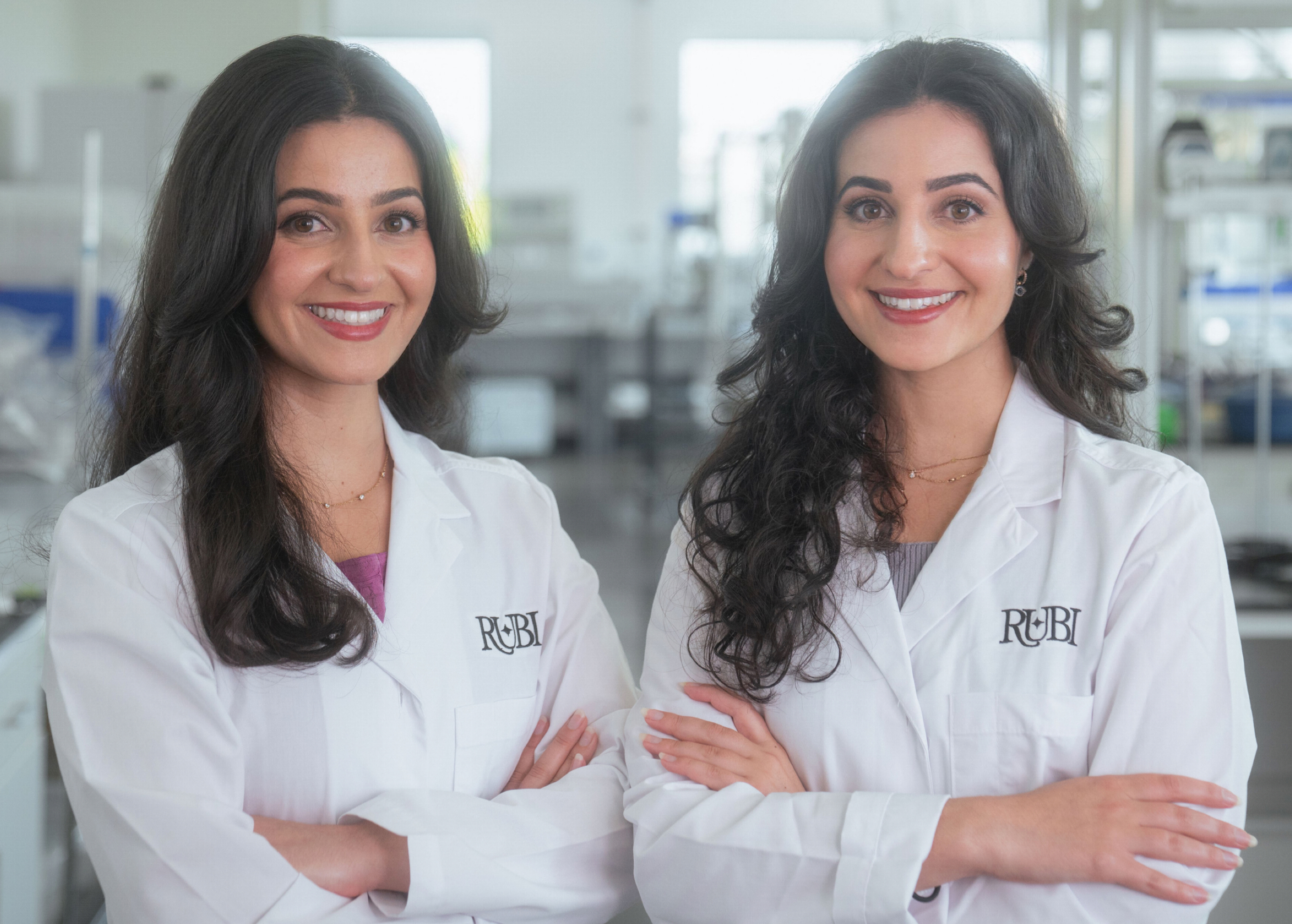
Born in a public biohacking lab, Rubi Laboratories employs CO2 as a resource, rather than a waste product. The technology, founded by sisters Neeka and Leila Mashouf mimics the way trees use CO2 to make cellulose to grow. “The process starts by taking waste carbon, then using a sequence of enzymes—the same type of proteins that drive chemical reactions in all living things—to break that carbon down and rebuild it into cellulose, the fiber found in plant cell walls,” explained Neeka. The cellulose is spun into lyocell and viscose yarn. “The result is pure cellulose that can go straight into existing textile manufacturing to be spun into yarn; no harsh chemicals, no farmland, no trees required,” she commented.
Rubi has pilot partnerships with H&M, Patagonia, Reformation and Nuuly and a project with Walmart. Rubi’s pilot partnership with GANNI marked the debut of the world’s first yarn made from CO2 through a fully enzymatic process—a critical step toward Rubi’s ultimate goal of producing commercial quantities of material for customers across key textile and CPG formulation products. As Rubi approaches industrial viability, the team continues fiber performance testing. In March, the firm announced 8 new commercial partnerships and a $7.5 million funding round.
Sustainable Dyeing
Textile dyeing processes have long been contentious in their effects on pollution. Livinguard offers two technologies for sustainable dyeing of cellulosic fibers which provide an environmental benefit, but also allows processing mills to decrease their processing costs, increase productivity and production capacity without any upfront capital investment.
Livinguard +DYE is a post-treatment for a conventional dyeing process (with salt) to reduce the down-stream washing after dyeing. The additive reduces the number, duration and temperature of wash and soap cycles needed to remove unfixed dyes. According to the firm, the result for mills is up to 50% water savings and up to 60% energy & CO2 savings while providing up to 40% increase in productivity and full compatibility. Alternatively, Livinguard EFD is a pre-treatment that allows for a salt-free dyeing process with reduced washing. Both are marketed to mills, with about 40 trials and collaborations (such as Swisstex California and Cotton Incorporated) ongoing worldwide.
In March 2026, H&M Foundation announced its top 20 finalists for its Global Change Award, recognizing early-stage innovations designed for decarbonization. The list includes three sustainable dye firms. Uganda’s Henry Kavuma brings Living Carbon Capture Dye Systems, founded to create carbon-negative products. The biologically engineered dyeing process uses cyanobacteria (blue-green algae) to capture atmospheric CO2 and convert it into textile dyes.
UK-based Colour Earth developed Regen Ink, a regenerative natural dye system that combines soil remediation with pigment production on polluted or post-mining land. Pigments are formulated into inks that improve color fastness versus synthetic dyes. MicroHues, headquartered in India, produces microbial dyes through fermentation. As an alternative to petrochemical and plant-based dyes, its biodegradable dyes function as drop-in replacements in existing dyeing systems, conserving water and reducing wastewater toxins.
also natural-based materials which have been treated with chemistries.



.svg)